Ever wonder why some Kyoto temples are hushed, minimalist gardens, while others are riotous explosions of gold statues and mystical diagrams? You stand in one, feeling a sense of calm emptiness. You stand in another, and feel a sense of overwhelming, cosmic power.
You are not imagining things. You are experiencing the deep, philosophical rifts that define Japanese Buddhism.
For a traveler, it’s easy to lump all of Kyoto's 1,600 temples into one generic "Buddhist" category. This would be a mistake. It is like calling all Italian food "pasta." The city is a living museum of Buddhist diversity, a spiritual ecosystem where different paths to enlightenment evolved, competed, and coexisted for centuries. Understanding this hierarchy is the key to unlocking a deeper appreciation for the places you visit. It is the difference between simply seeing a temple and truly reading it.
The Big Tent: Mahayana Buddhism
First, let's zoom out. Nearly all Buddhism you will encounter in Japan falls under the umbrella of Mahayana Buddhism, the "Great Vehicle." When Buddhism rolled into Japan from the mainland in the 6th century, it brought with it the core Mahayana idea of the bodhisattva. This is an enlightened being who, out of great compassion, delays their own final nirvana to help every other suffering soul get there first. It is a philosophy of universal salvation, a great "we're all in this together" spiritual project.
But how to achieve that salvation? That's where things get interesting. Two major schools of thought emerged, offering radically different answers.
The First Split: The Mind vs. The Cosmos
Imagine two paths up a mountain. One is a steep, rocky climb you must make yourself. The other is a winding road filled with magical signs and powerful helpers. This is the fundamental difference between Zen and Shingon.
Zen: The DIY Path
Zen Buddhism is Buddhism stripped down to its fighting weight. It argues that enlightenment isn't found in books or rituals, but through direct, personal experience. The only tool you need is your own mind. The practice is centered on zazen, or seated meditation, a discipline for observing the mind until you see through its illusions to your own innate Buddha-nature. Zen is about self-reliance, discipline, and the profound beauty of the ordinary.
Shingon: The Mystical Path
If Zen is an unplugged acoustic set, Shingon is a heavy metal concert with a laser show. As a form of Esoteric Buddhism, it is a universe of complexity. Shingon teaches that one can achieve "Buddhahood in this very body" through the mastery of the "Three Mysteries": secret rituals (mudra), mystical chants (mantra), and cosmic diagrams (mandala). It has an elaborate pantheon of deities, demons, and celestial beings. It is a path of power, symbolism, and unifying the self with the cosmic forces of the universe.
The Zen Civil War: Sudden Shock vs. Slow Burn
Even within Zen, the arguments weren't over. Two major sub-schools emerged, disagreeing on the very nature of enlightenment.
Rinzai Zen: Shock Therapy for the Soul
The Rinzai school believes in sudden enlightenment (satori). The practice is designed to jolt the student out of their rational mind. This is the school of the kōan—the paradoxical riddle like "What is the sound of one hand clapping?" A kōan is a workout for the mind, a puzzle with no logical answer designed to exhaust the intellect until it breaks, opening a space for intuitive insight. Rinzai practice can feel intense, formal, and intellectually rigorous.
Soto Zen: The Marathon of Just Sitting
The Soto school, by contrast, believes in gradual enlightenment. Its core practice is shikantaza, or "just sitting." There are no kōans to solve or sudden breakthroughs to chase. The philosophy is that you are already a Buddha. Zazen is not a means to an end; it is the practice of being the Buddha you already are. The enlightenment is not a destination you arrive at, but a path you walk, step by step. Soto practice feels quieter, more serene, and deeply rooted in monastic discipline.
Kyoto as a Living Textbook
This complex family tree is not just abstract theology. It is written in the wood, stone, and layout of Kyoto's temples.
The Rinzai Showcase
Rinzai Zen, with its formal structure and appeal to the samurai class, found powerful patrons among the shoguns. Its temples are often grand, architecturally sophisticated, and feature gardens designed for focused contemplation.
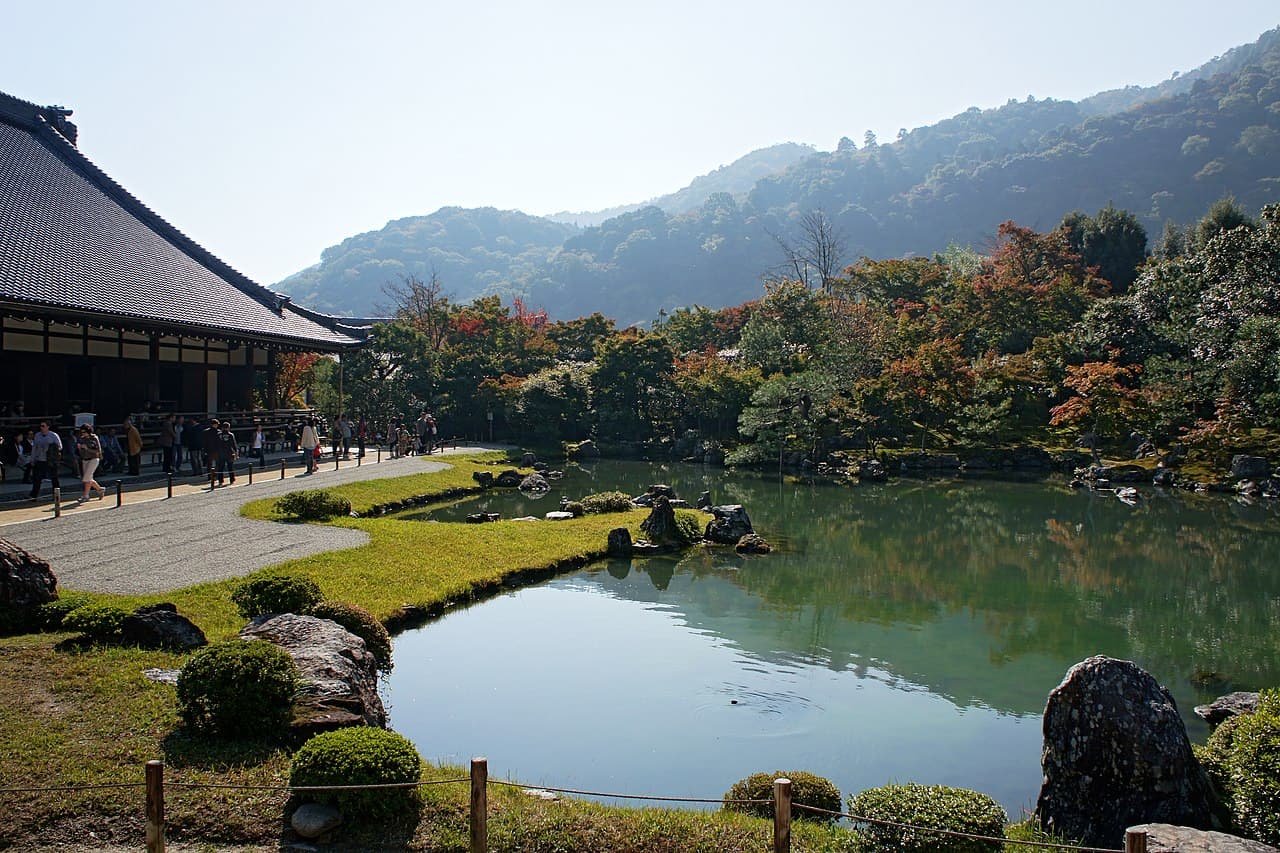
- Tenryū-ji: The number one temple of Kyoto’s "Five Mountains," founded by a shogun. Its Sogenchi Pond Garden, a UNESCO World Heritage site, is a masterpiece of Zen aesthetics, using the "borrowed scenery" of the Arashiyama mountains to express the unity of all things.
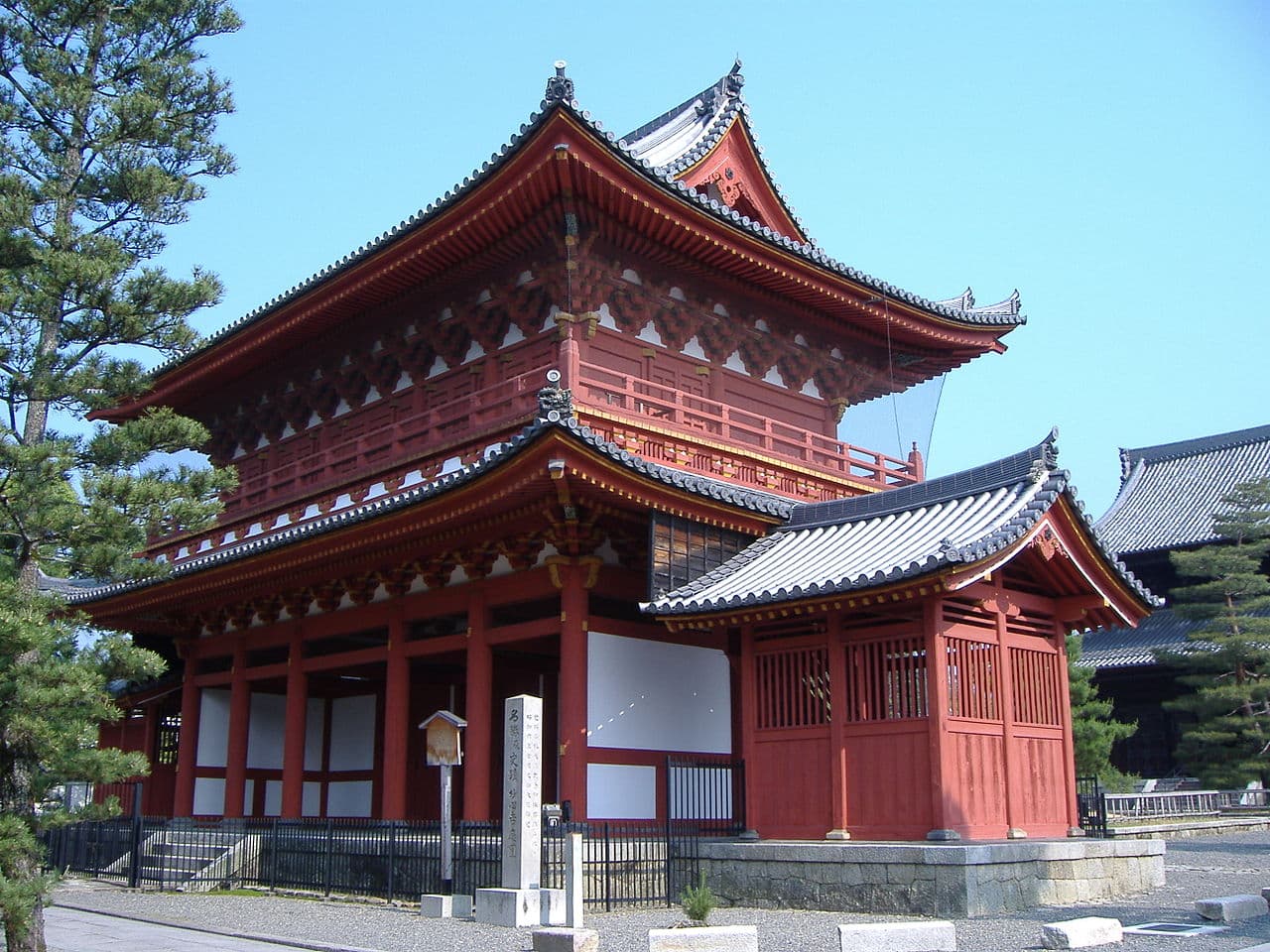
- Myōshin-ji: Not just a temple, but a city unto itself. As the head of the largest Rinzai branch, this sprawling complex of over 40 sub-temples feels like a university campus for Zen. It is a hub of active monastic training.
Loading listing...
Loading listing...
The Soto Showcase
Soto temples in Kyoto are less numerous than their Rinzai counterparts, but they offer a distinct, quieter energy.
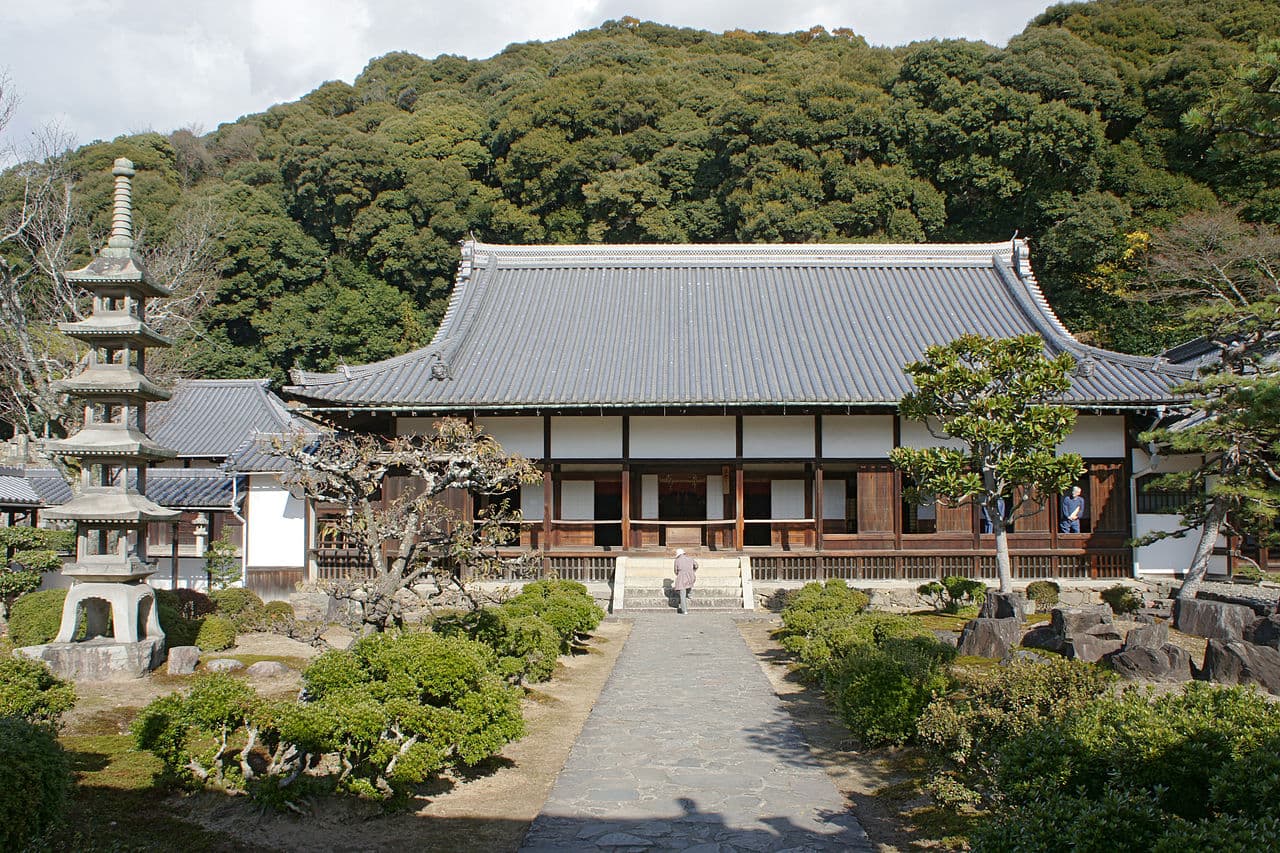
- Kōshō-ji (Uji): Just outside Kyoto proper, this is the first Soto Zen monastery ever established in Japan by the school's founder, Dōgen Zenji. It is the historical heart of the Soto lineage in Japan.
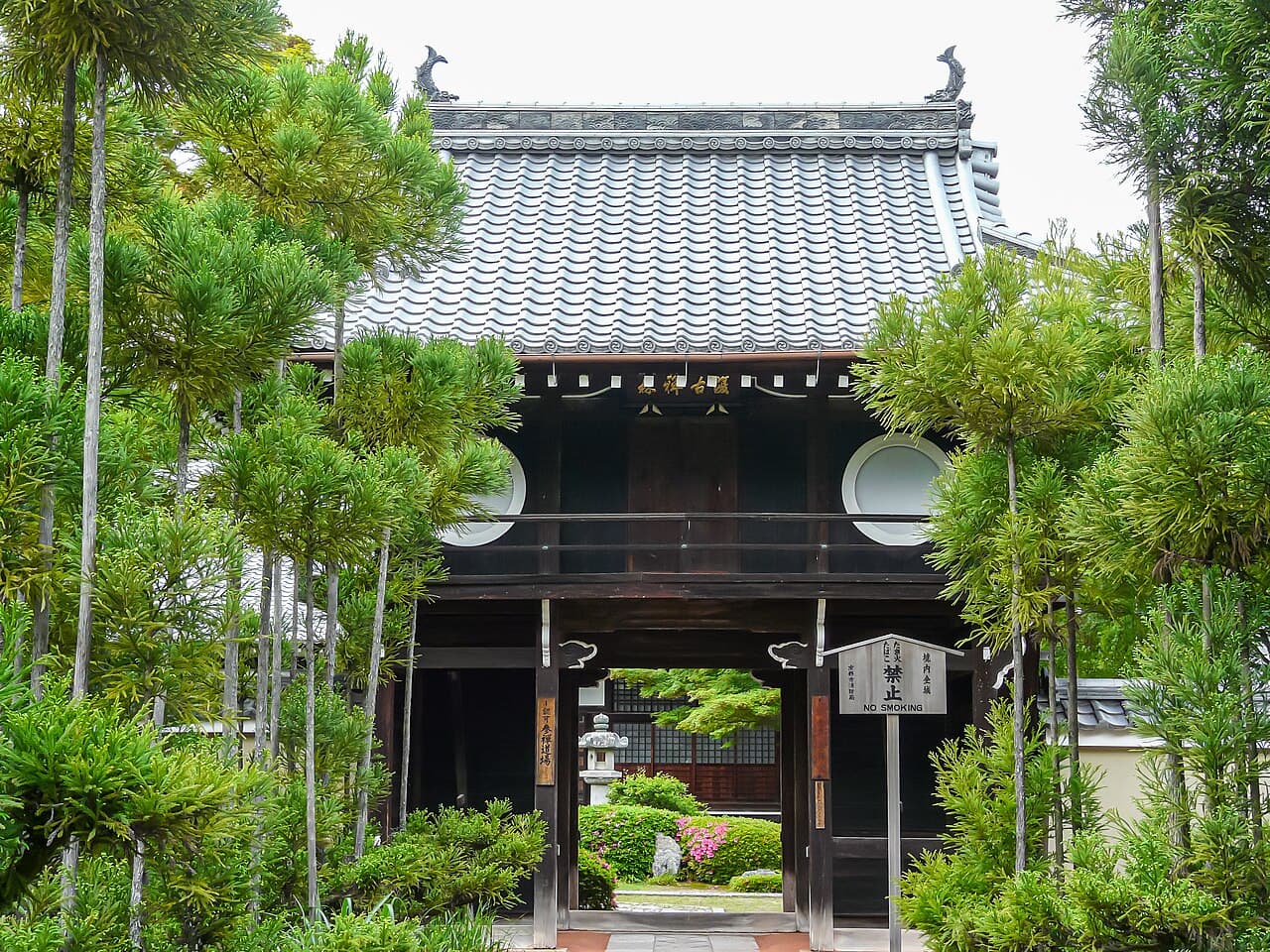
- Genkō-an: This temple is famous for its two windows. The square "Window of Delusion" represents the trapped, four-cornered state of ordinary human life. The round "Window of Enlightenment" symbolizes the boundless, perfect nature of satori.
Loading listing...
Loading listing...
The Shingon Showcase
Shingon temples feel different. They are places of immense power, filled with art that is both beautiful and functional, designed as tools for mystical practice.
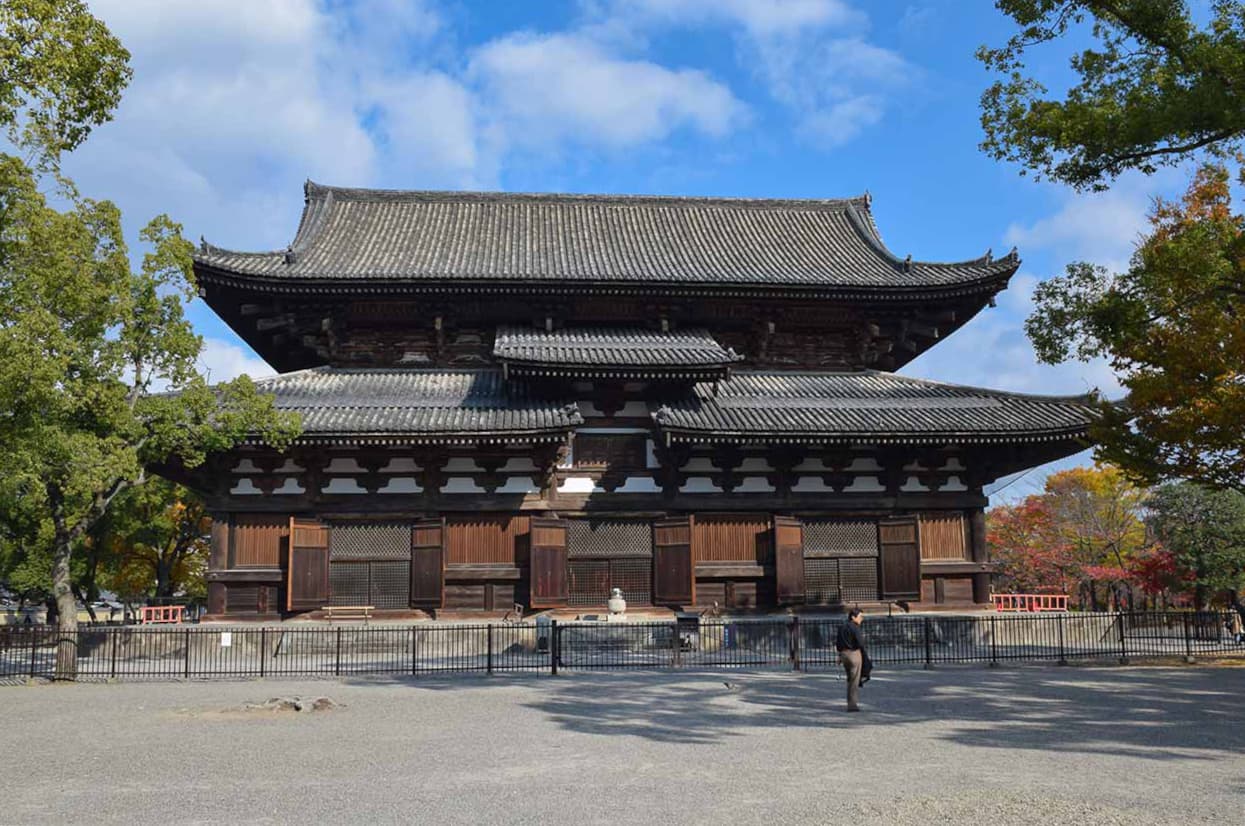
- Tō-ji: This is the headquarters. Entrusted to the school's founder, Kōbō Daishi (Kūkai), by the Emperor himself. Its five-story pagoda is the symbol of Kyoto. The Kōdō hall is filled with a three-dimensional mandala of 21 statues, a cosmic map of the Shingon universe that is simply awe-inspiring.
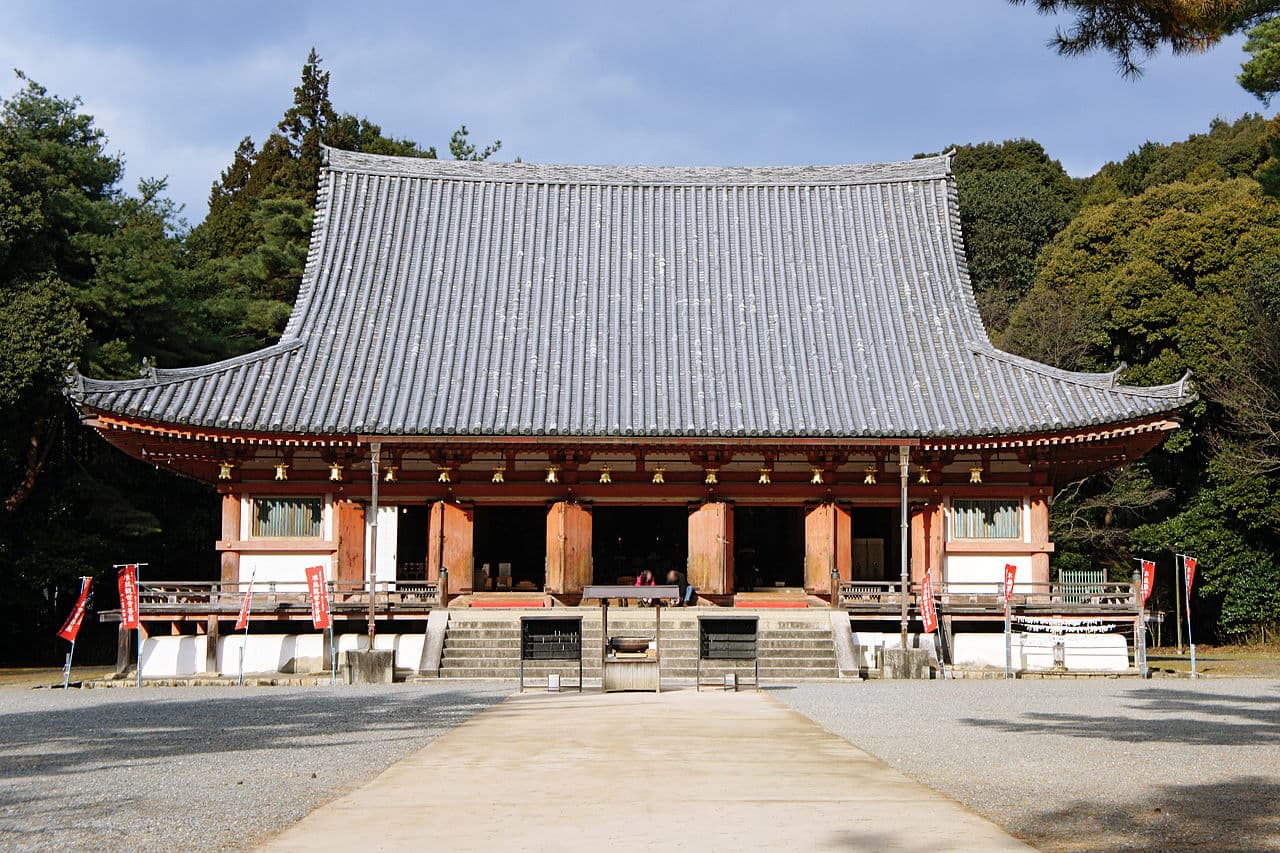
- Daigo-ji: A massive, mountain-spanning UNESCO site that exudes the wealth and power that Shingon often attracted. It’s a world of ornate halls, hidden shrines, and vibrant color.
Loading listing...
Loading listing...
A Note on the Path Not Taken
You might hear about a third major branch of Buddhism called Theravada. It is dominant in Southeast Asia and focuses on individual enlightenment. But it is important to know that Theravada has virtually no historical roots in Japan. Buddhism arrived in Japan when Mahayana was the dominant force on the continent, so you won't find ancient Theravada temples in Kyoto.
The Traveler’s Field Guide
How can you, the traveler, feel the difference on the ground?
- If you see a dry rock garden... meticulously raked and designed for viewing from a veranda, you are likely in a Rinzai Zen temple. The garden is a tool for concentration, a kōan in stone. Think Ryōan-ji.
- If you feel an atmosphere of quiet, austere discipline... with less emphasis on "showy" gardens and more on the simple beauty of the halls, you might be in a Soto Zen space. The beauty is in the practice itself.
- If you are surrounded by countless statues... mandalas on the walls, and the air is thick with the smell of incense from elaborate rituals, you are almost certainly in a Shingon temple. You are in a place of cosmic power and mystery.
Conclusion: A City of Many Paths
Kyoto’s temples are not a monolith. They are the battlegrounds and classrooms of centuries of philosophical debate. They represent the incredible diversity of paths that the human mind has devised to answer the great questions of existence.
By learning to recognize the differences, you transform your visit. The temples cease to be just beautiful buildings. They become arguments, philosophies, and invitations. One asks you to look inward and find the answer in the silence of your own mind. Another asks you to look outward and see yourself as part of a grand, mystical cosmos.
The beauty of Kyoto is that you don't have to choose. You can walk many paths in a single afternoon.