If the temples of Kyoto are its soul, Maruyama Park (Maruyama Kōen) is its beating, boisterous heart.
Located at the very foot of the Higashiyama mountains, sandwiched between the sacred precincts of Yasaka Shrine and the historic temples of the east, this is a cultural institution. It is the city’s communal living room, a place where the rigid social etiquettes of Japan loosen their tie, kick off their shoes, and crack open a beer.
While guidebooks might list it simply as a "public park," that label fails to capture the sheer kinetic energy of the place. This is where Kyoto comes to exhale. It is a landscape of dualities: it is Japan’s oldest public park, a masterpiece of Meiji-era garden design, and yet, for two weeks every spring, it transforms into a chaotic, joyous festival ground that looks less like a garden and more like a rock concert for flowers.
Whether you are here to worship the legendary "Queen of Sakura," to escape the Gion crowds, or simply to understand how locals truly live, Maruyama Park is an essential stop.
The Genesis of a Green Sanctuary
To understand Maruyama Park, you have to understand the era that birthed it. Before 1886, the concept of a "public park" didn't really exist in Kyoto in the way we understand it today. The land where the park sits was originally part of the extensive precincts of Yasaka Shrine and other nearby temples. It was sacred ground, meant for gods, not picnics.
But the Meiji Restoration brought a tidal wave of modernization and Western influence. The government separated Shinto and Buddhism, seized temple lands, and sought to create modern urban amenities for the citizenry. Out of this upheaval, Maruyama Park was born as Kyoto's first designated public park.
However, the city didn't just clear the land and plant some grass. They hired Ogawa Jihei VII (also known as Ueji), a landscape architect who would go on to become a legend. Ueji was a pioneer of the "naturalistic" style. He rejected the stiff, overly abstract rock gardens of the past in favor of lush, flowing designs that utilized water, borrowed scenery (shakkei), and gentle topography.
Walking through the park today, you are walking through Ueji’s vision. It is designed as a kaiyu-shiki (stroll garden). The paths meander intentionally, forcing you to slow down. Ponds reflect the sky and the changing leaves. It feels wild and organic, but every sightline has been calculated. It is a masterclass in making the artificial feel inevitable.
The Crown Jewel: The Gion Weeping Cherry
Let’s be honest: if you are reading about Maruyama Park, you are probably interested in sakura. And you should be. Maruyama Park isn't yet another place to see cherry blossoms; it is the place.
The park is home to roughly 680 cherry trees, but 679 of them are just the backup dancers. The star of the show is the Gion Shidare-zakura—the Gion Weeping Cherry Tree.
Standing in the center of the park, this tree is a botanical monster. It stands over 12 meters tall, its heavy branches cascading down like a waterfall of pale pink fireworks. The current tree is a "second generation" planting, grown from the seed of its 200-year-old predecessor and officially planted in 1949. It is essentially the matriarch of Kyoto’s spring.
The Night Transformation
While the tree is majestic during the day, it is during the yozakura (night viewing) that it becomes otherworldly. From sunset until roughly 10:00 PM (during the season), the tree is illuminated by floodlights.
The effect is arresting. Against the pitch-black night sky, the blossoms glow with a ghostly, ethereal luminescence. It looks less like a tree and more like a suspended cloud of light. This is the image that graces a thousand postcards, but seeing it in person, surrounded by the hushed (and sometimes raucous) awe of the crowd, is a singular Kyoto experience.
The Hanami Chaos: Blue Tarps and Yakisoba
If you visit during peak bloom (usually the first week of April), banish any thoughts of a quiet, meditative Zen experience. During hanami, Maruyama Park is a party.
The "blue tarp" is the unofficial flag of the season. Locals, from university students to corporate salarymen, arrive at dawn (or send the lowest-ranking intern) to stake out territory with expansive blue plastic sheets. By noon, every square inch of ground beneath the cherry trees is covered.
This is hanami in its rawest form. It’s loud. It’s crowded. The air is thick with the smoke of yatai (food stalls) grilling yakisoba, squid, and wagyu skewers. Sake flows freely. You will hear laughter, singing, and the clinking of glasses. It is a sensory overload that stands in stark contrast to the quiet, dusty atmosphere of the nearby temples.
For a traveler, it can be overwhelming, but I urge you to lean into it. Grab some takoyaki from a stall, find a corner to stand in, and watch Kyoto celebrate being alive. It’s a reminder that for all its ancient history, this is a living city with a pulse.
The Sacred Neighbor: Yasaka Shrine
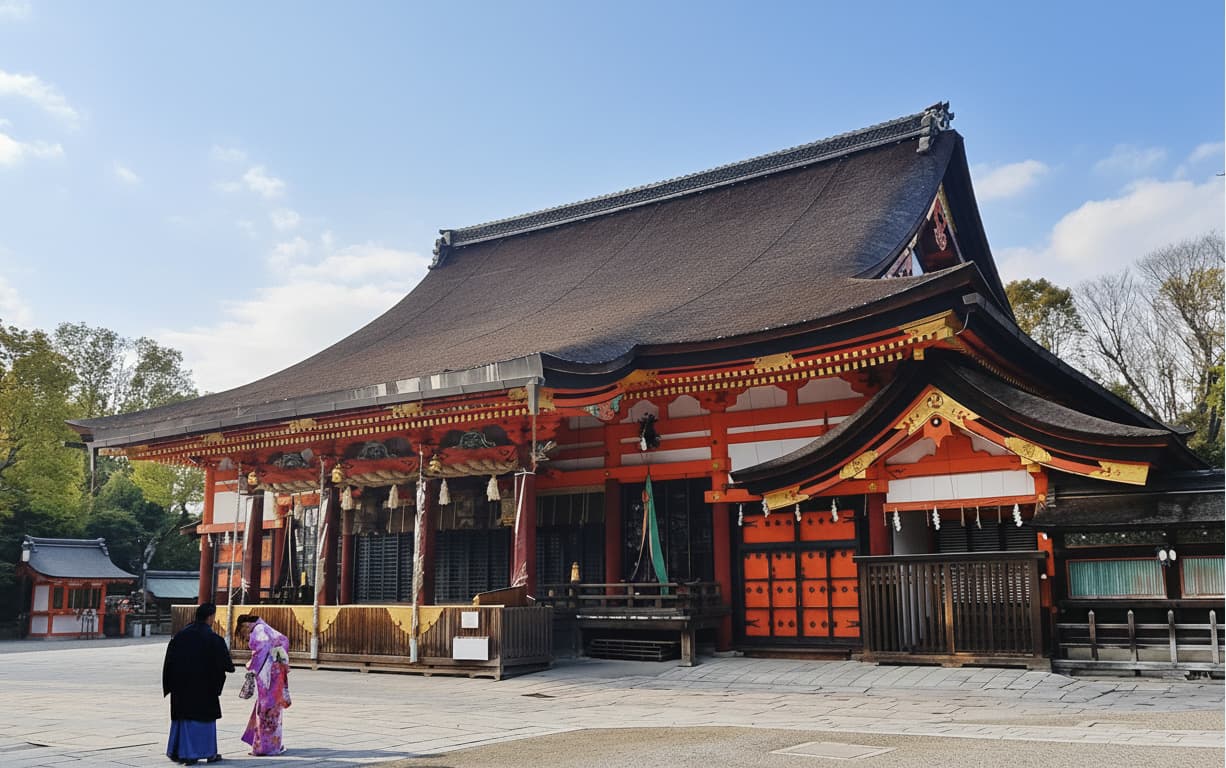
You cannot talk about Maruyama Park without talking about Yasaka Shrine. The two are joined at the hip quite literally.
Because the park was carved out of the shrine's former land, there is no hard border between them. Most visitors naturally drift from the shrine into the park without even realizing they’ve crossed a line. You might be admiring the vermilion gates and lanterns of the shrine one minute, and the next, you’re standing by a pond in the park.
Loading listing...
This proximity imbues the park with a subtle spiritual undercurrent. Yasaka Shrine is dedicated to Susanoo-no-Mikoto, a powerful deity associated with storm and sea, and is the host of the massive Gion Matsuri festival in July. The energy of the shrine spills over into the park. The massive torii gates that mark the entrances serve as a reminder that while you are in a public playground, you are standing on the edge of the divine.
This porous border between the sacred and the secular is quintessential Kyoto. It suggests that recreation and reverence aren't opposites; they are neighbors.
A Year-Round Embrace
While spring gets all the press, Maruyama Park is a "24/7 green escape button" for the city throughout the year.
In Summer: When the Kyoto basin turns into a humid pressure cooker, the park offers shade and the cooling psychological effect of its ponds. It’s a popular spot for locals to escape the heat of the Gion pavement.
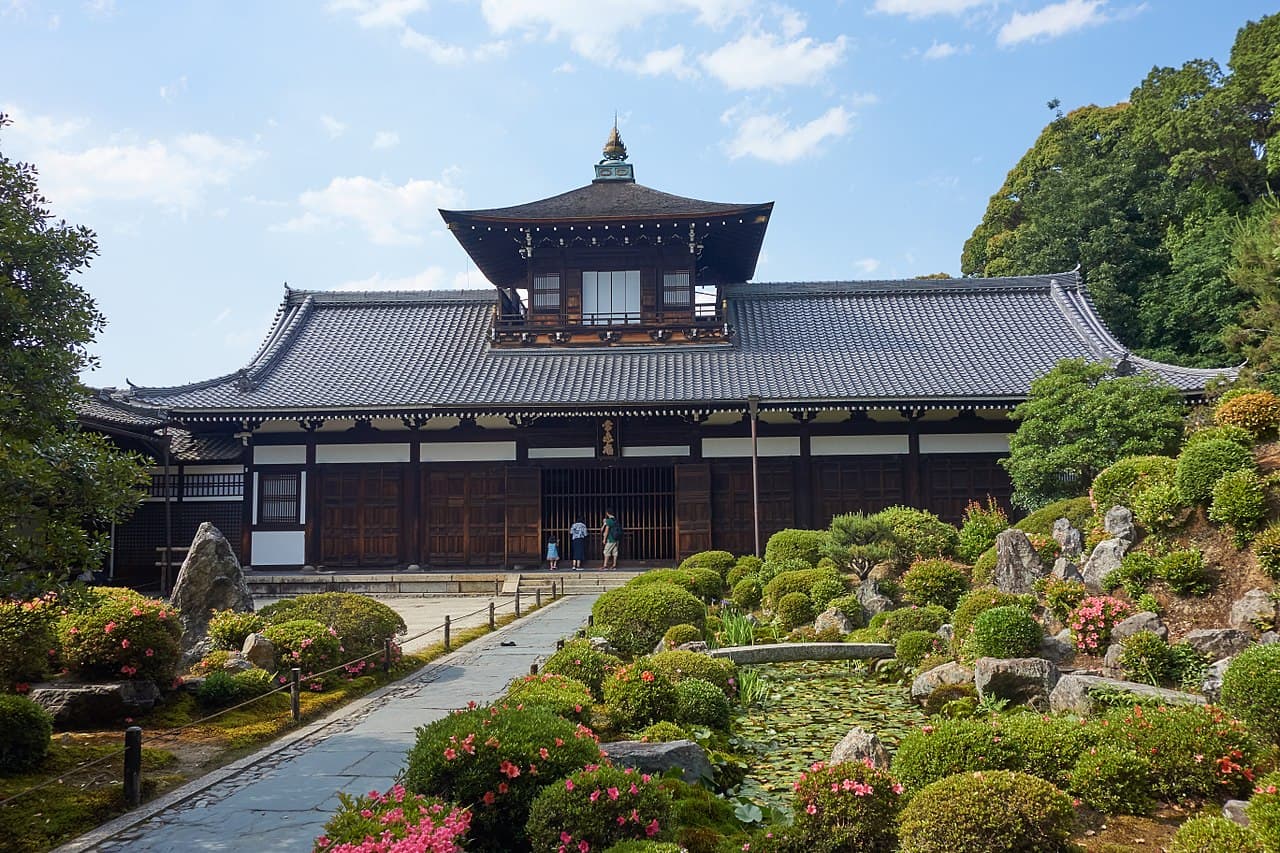
In Autumn: The maples here are underrated. While the crowds flock to Tōfuku-ji or Eikan-dō, Maruyama Park offers beautiful foliage without the admission fees or the elbow-to-elbow crushing. The mix of evergreen pines and fiery maples reflected in the central pond creates a moody, contemplative atmosphere.
Loading listing...
Loading listing...
In Winter: The park is quiet. The architecture of the bare trees, especially the weeping cherry, takes on a sculptural beauty. It’s a great time to visit if you want to appreciate Ogawa Jihei’s landscape design without the distraction of flowers or crowds.
Practical Guide: How to Visit
One of the best things about Maruyama Park is its accessibility. In a city where temple entrance fees can add up quickly, Maruyama is a breath of fresh, free air.
- Admission: Free.
- Hours: Open 24 hours, 365 days a year.
- Location: Directly adjacent to Yasaka Shrine in the Higashiyama district.
Getting There
- From Kyoto Station: Take bus #100 or #206 to the Gion stop. From there, it’s a short walk through Yasaka Shrine.
- By Train: The closest stations are Gion-Shijo (Keihan Line) or Kawaramachi (Hankyu Line). Both are about a 10-15 minute walk away.
Insider Tips
- If you want a photo of the Weeping Cherry without 500 people in the frame, you need to be there at sunrise. The park is open 24/7, so the only limit is your ability to wake up. The light at 6:00 AM is soft, and the blue tarps are empty.
- Because the park never closes, it’s a fantastic place for a late-night walk after dinner in Gion. The crowds thin out after 9:00 PM, but the lanterns often stay on. It’s romantic, quiet, and safe.
- You don’t need to pack a lunch. The park is filled with vendors during peak seasons, and there are permanent restaurants (some quite upscale) located within the park grounds, offering traditional kaiseki meals in historic buildings.
- If you do join the hanami, remember the golden rule: take your trash with you. Kyoto locals are fiercely protective of their cleanliness. Don't be the tourist who leaves a pile of beer cans behind.
The Verdict
Maruyama Park is the stage upon which Kyoto performs its seasons. It is where the city comes to mourn the passing of time under falling petals, and where it comes to celebrate the simple joy of a sunny afternoon.
It lacks the austere, closed-off mystery of the Zen temples. It isn't a place for silent meditation. It is a place for life. Whether you are navigating the sakura crowds or taking a solitary winter walk, Maruyama Park offers something that is increasingly rare in major tourist hubs: a space that belongs to everyone.