Nijo Castle
Nijō-jō二条城

Nijo Castle
Nijō-jō二条城
About Nijo Castle
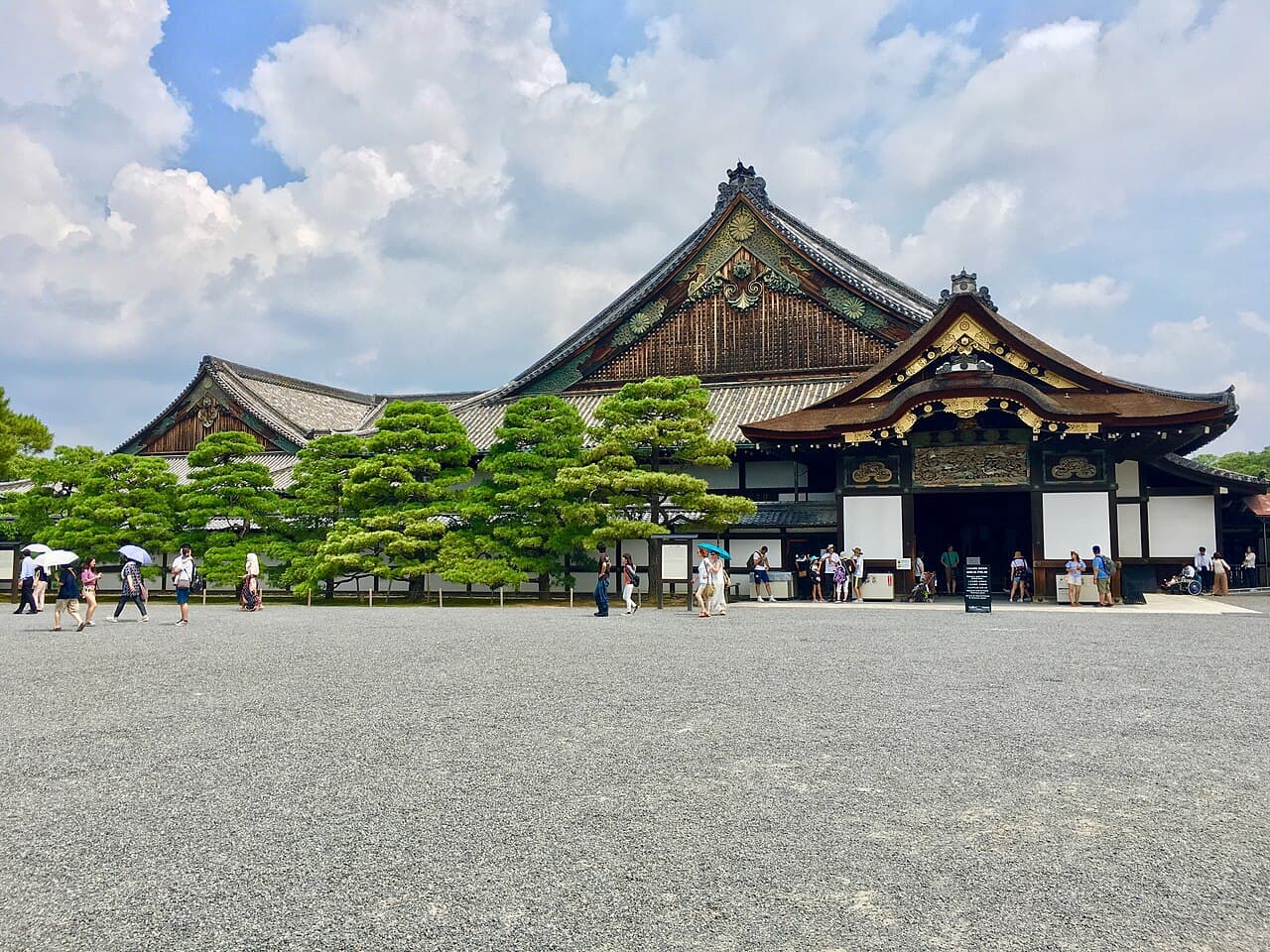
Nijō Castle is a UNESCO World Heritage site that served as the Kyoto residence of the Tokugawa shoguns. Built by Tokugawa Ieyasu, its Ninomaru Palace is a stunning example of feudal-era architecture, famous for its 'nightingale floors' designed to chirp to warn against intruders. The palace is decorated with magnificent screen paintings by the Kanō school. Critically, it was here in 1867 that the last shogun declared the restoration of power to the Emperor, marking the end of the shogunate and the dawn of modern Japan.
Cultural Assets
Ninomaru Palace
National TreasureA perfectly preserved example of a feudal-era castle palace, featuring nightingale floors and lavish screen paintings by the Kanō school.
Kanō School Paintings
Important Cultural Property1,016 of the 3,600 wall and screen paintings within the Ninomaru Palace, created by masters such as Kanō Tan'yū.
Ninomaru Garden
National Site of Scenic BeautyA traditional strolling garden with a large pond, ornamental stones, and pruned pines, believed to have been designed by master Kobori Enshū.
Cultural Experiences
Tea Ceremony
Availability: Held in the Seiryū-en Garden during cultural events
Seasonal Illuminations
No Reservation NeededAvailability: Held during spring cherry blossom and autumn foliage seasons
The Ninomaru Palace has separate closing days (typically Tuesdays in Jan, Jul, Aug, Dec, and over New Year). Always check the official website, as the Honmaru Palace requires a separate advance reservation.
¥1300 for a combined ticket including the Ninomaru Palace. A grounds-only ticket is ¥800. A separate reservation and fee (¥1000) are required for the Honmaru Palace.
Allow at least 2 hours to see the Ninomaru Palace and gardens. A full exploration including the Honmaru area could take over 3 hours.
Highly accessible. Manual wheelchairs are available for loan. While grounds have gravel paths, wheelchair users can enter the palaces, sometimes requiring a transfer to a castle-provided chair. Accessible toilets are available.
Best Time to Visit
Stunning in late March-April for over 50 varieties of cherry blossoms, and mid-November to early December for autumn colors. Visit right at the 8:45 AM opening to avoid the largest crowds.
Getting There
Directly accessible from Nijōjō-mae Station on the Tozai Subway Line. From Kyoto Station, take the Karasuma Line and transfer to the Tozai Line at Karasuma-Oike Station.
Photography Policy
Photography is strictly prohibited inside the Ninomaru and Honmaru Palaces. Outdoor photography is permitted, but the use of monopods and tripods is forbidden throughout the grounds.