Jingoji Temple
Jingo-ji神護寺
Jingoji Temple
Jingo-ji神護寺
About Jingoji Temple
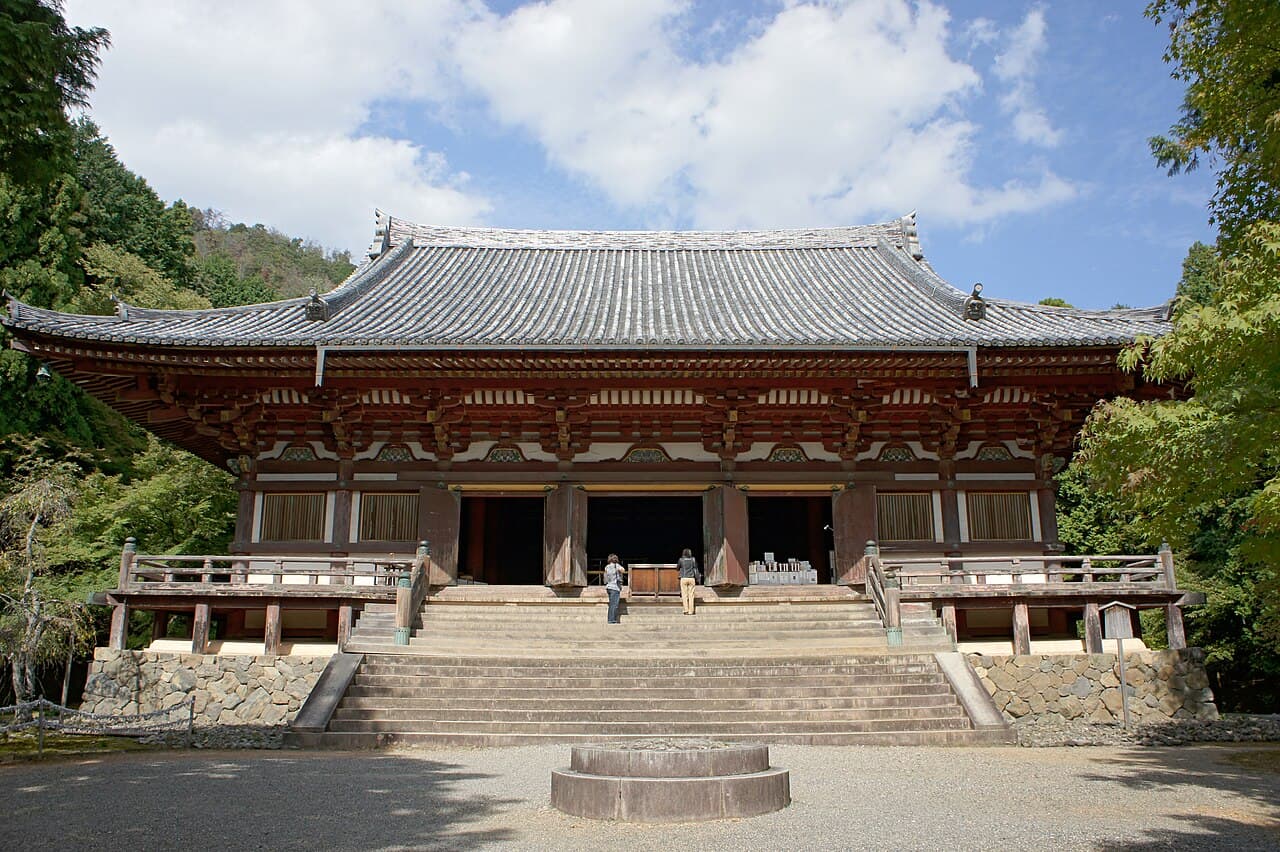
Jingo-ji is a venerable Shingon Buddhist temple on the forested slopes of Mount Takao, accessible via a long stone staircase. Presided over by Kūkai (Kōbō Daishi) in the 9th century, it is a treasure trove of Japanese history, housing numerous National Treasures including its main icon, a statue of the Yakushi Nyorai (Medicine Buddha). The temple is famed for its early autumn foliage and a unique ritual called Kawarake-nage, where visitors fling small clay discs into the valley below to cast away misfortune.
Cultural Assets
Statue of Yakushi Nyorai (Medicine Buddha)
National TreasureThe temple's principal object of worship, a masterpiece of early Heian period sculpture from the 8th century.
Name List of Abhisheka [Initiates]
National TreasureA historically significant document written by the temple's chief priest Kūkai in 812, showcasing his renowned calligraphy.
Jingo-ji-kyō Sutras
National TreasureA collection of ancient Buddhist sutras forming a part of the Issaikyō Buddhist corpus.
Cultural Experiences
Kawarake-nage (Clay Disc Tossing)
No Reservation NeededAvailability: Daily, during opening hours
Special exhibitions of temple treasures are held on specific dates, primarily in May and October.
Admission is ¥600 for adults. The Kawarake-nage ritual requires a separate fee of approximately ¥200 for a set of clay discs.
A standard visit, including the climb up and down the mountain path, exploring the grounds, and participating in the Kawarake-nage ritual, takes roughly 2.5 to 3.5 hours.
Not accessible. The approach from the bus stop involves a steep climb of approximately 350 stone steps, and the grounds are uneven.
Best Time to Visit
Best in mid-November for autumn foliage, which appears earlier here than in central Kyoto. For a quieter visit, choose a weekday or an off-peak season like late spring.
Getting There
From Kyoto Station, take the JR Bus (Takao/Keihoku Line) to the Yamashiro Takao stop (~50 min), then walk ~20 minutes, including the long staircase up the mountain.
Photography Policy
Photography is permitted outdoors. It is restricted inside the Kondō (Main Hall) and other buildings housing National Treasures. Flash photography is prohibited.